Healthcare organizations continue to face growing administrative demands that pull clinicians away from patient care. From documentation requirements to disconnected systems, care teams are spending more time navigating workflows and less time focused on meaningful clinical engagement. These pressures contribute to frustration, delays, and burnout while making it harder for teams to work at the top of their license. Healthcare workforce technology is helping organizations improve clinical efficiency, reduce manual work, and streamline workflows to support better care delivery and enhance coordination across care teams.
The Administrative Burden on Care Teams
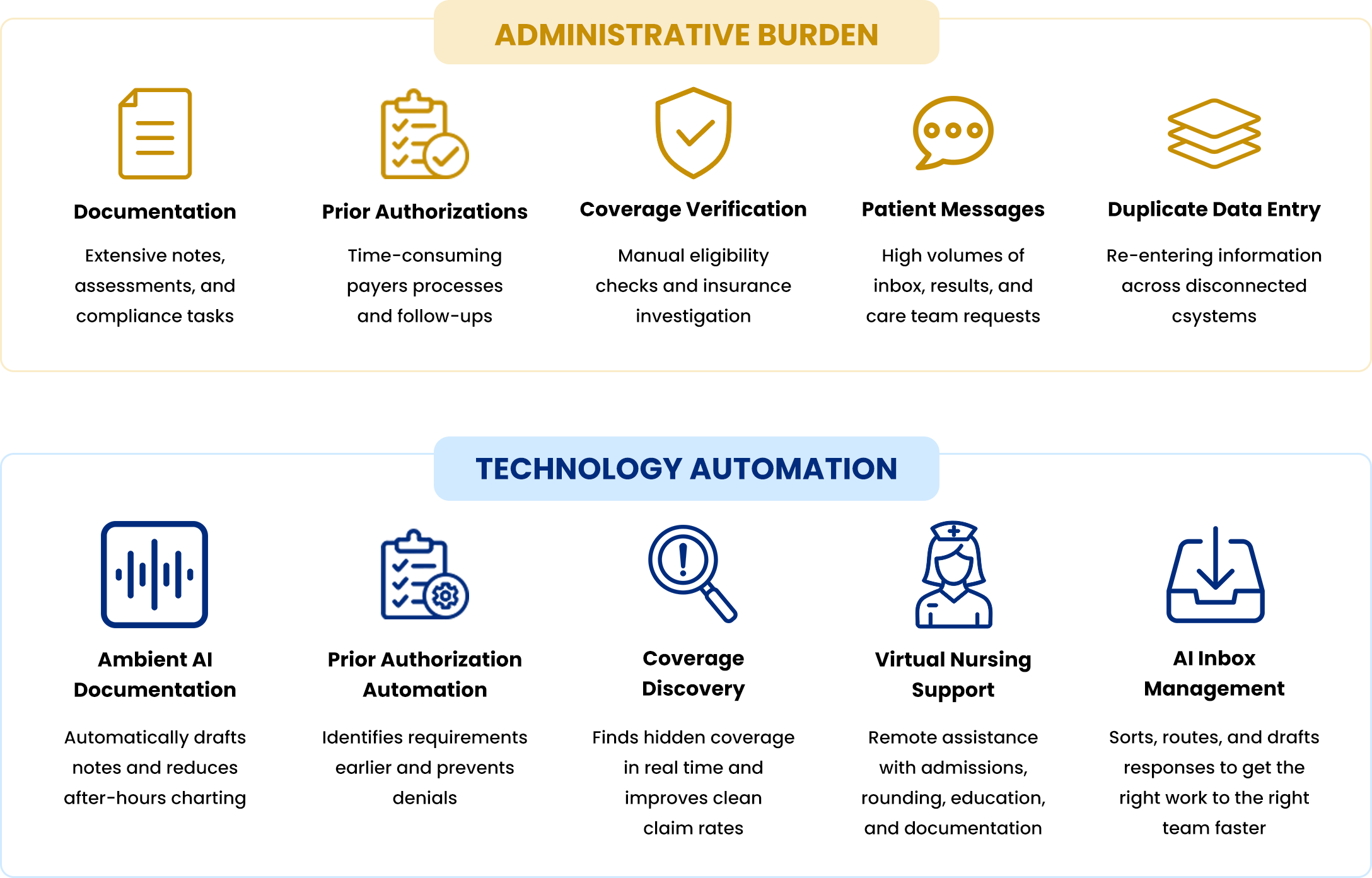
Documentation overload remains one of the biggest challenges facing clinicians. Notes, orders, coding requirements, assessments, prior authorizations, and regulatory documentation consume a large portion of the clinical day. While documentation is necessary for compliance, billing, and continuity of care, it becomes problematic when workflows are duplicative or poorly aligned with how clinicians actually work.
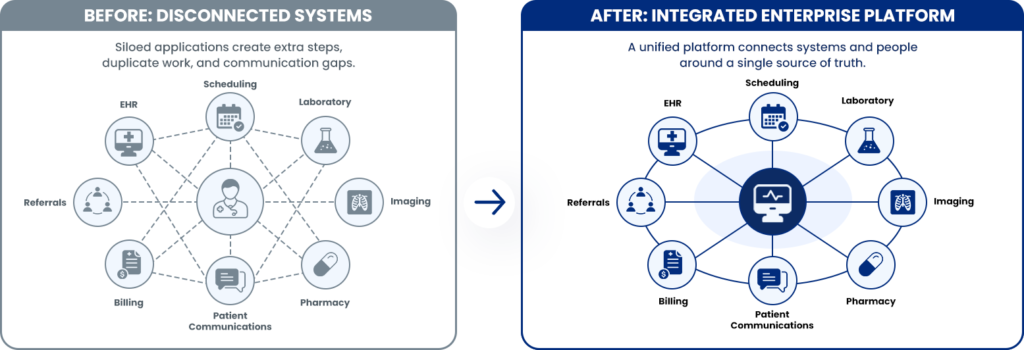
At the same time, fragmented systems create additional inefficiencies. EHRs, scheduling tools, imaging systems, billing platforms, referral systems, and patient communication tools often do not integrate cleanly. As a result, staff spend valuable time re-entering information, validating records, resolving duplicate work, and chasing missing documentation.
These inefficiencies contribute to burnout, delayed communication, and less time available for direct patient engagement.
How Technology is Helping Care Teams Work More Efficiently
Modern healthcare technology is helping reduce repetitive administrative work and improve clinical efficiency across healthcare organizations.
Some of the most common technologies being adopted include:
- Ambient AI listening tools that draft clinical notes during patient visits, reducing typing, after-hours charting, and screen time during visits, ultimately improving clinician well-being.
- AI-driven eligibility and prior authorization automation that helps reduce denials caused by front-end breakdowns in coverage identification, eligibility verification, and manual workflows. These tools identify payer requirements earlier in the process, reduce time spent navigating payer portals and calls, and help prevent recurring denials before claims are submitted.
- Automated coverage discovery tools that identify hidden insurance coverage in real time, reducing the need for staff to manually investigate inactive responses or incorrect self-pay classifications. This helps shift work upstream, reduce administrative burden, and improve clean claim rates.
- Virtual nursing is also helping organizations rethink how work gets done. Experienced nurses can support bedside teams remotely with admissions, discharges, patient education, documentation, rounding support, and monitoring. This reduces interruptions for bedside nurses and gives them more time for hands-on care. When designed well, virtual nursing extends the reach of experienced staff and improves workflow support without adding more burden at the bedside.
- AI inbox management tools that sort, route, and draft responses for patient messages, refill requests, lab results, and follow-up tasks. These tools help the right work reach the appropriate team member faster, especially as inbox volumes continue to grow faster than staffing capacity.
These technologies help staff spend less time on repetitive tasks and more time focused on higher-value work that supports patient care.
The Importance of Better-Integrated Systems
Starting around 2010 to 2015, many healthcare organizations began moving away from disconnected best-of-breed applications and toward integrated enterprise EHR platforms. Driven largely by Meaningful Use initiatives and certified EHR adoption, organizations focused on creating a more unified experience across inpatient, ambulatory, lab, radiology, pharmacy, and billing workflows.
While early enterprise EHR platforms were not always considered best-of-breed in every area, health systems recognized the long-term value of stronger integration and a shared patient record.
As these platforms matured, organizations experienced:
- Stronger communication across care teams
- Fewer handoffs between departments
- Less duplicate documentation
- More consistent access to information
- Improved workflow coordination
These improvements continue to support better collaboration and reduce delays across the care process.
Improving the Clinician Experience
Efficiency gains directly impact the clinician experience. When workflows are simpler and systems are easier to use, clinicians spend less time fighting technology and more time focused on patient care.
Fewer clicks, cleaner handoffs, and reduced duplicate work helps lower frustration and improve technology adoption. These improvements also support faster decision-making, better communication, and reduced after-hours documentation.
In one healthcare organization, the issue was not a lack of beds but a lack of coordinated patient flow, which contributed to delayed discharges, ED bottlenecks, capacity alerts, and clinician frustration. The organization addressed this by implementing a centralized logistics model supported by real-time dashboards, predictive tools, RN-led patient placement, and discharge lounges to keep patients moving. As a result, patient flow improved, clinicians had clearer priorities, delays were reduced, and care teams spent less time chasing barriers outside their core work.
Building a More Sustainable Healthcare Workforce
As healthcare workforce technology continues to evolve, its role in supporting the clinician experience will only become more significant. Reducing administrative burden is essential to helping care teams work more effectively, improve communication across the care continuum, and create more time for meaningful patient engagement. By investing in technologies that streamline workflows, reduce repetitive tasks, and improve coordination, healthcare organizations can build stronger, more sustainable care environments that better support long-term care delivery.