Revenue cycle interactions, from scheduling and eligibility verification to billing and payment, shape how patients experience a healthcare organization. When these processes are slow or confusing, they can undermine trust in the care experience. Used strategically, hospital revenue cycle automation can remove administrative friction, accelerate routine transactions, and give employees more time to support patients with complex or sensitive needs. The most effective approach is to automate rules-based work, preserve human support where judgment and empathy matter, and measure whether the redesigned experience improves outcomes for both patients and employees.
Where Automation Adds the Most Value
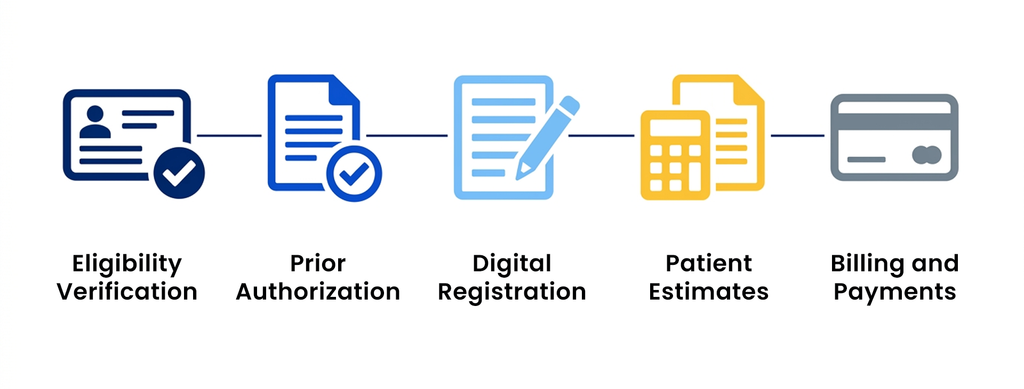
The strongest candidates for automation are high-volume, rules-based transactions with clear inputs and predictable outcomes. Examples include insurance eligibility verification, prior authorization status checks, appointment reminders, digital registration and document collection, pre-service estimates, billing status notifications, and payment-plan enrollment. Automating these tasks can reduce delays and repetitive work while allowing employees to focus on exceptions, complex accounts, and patient questions that require judgment.
Automation should follow workflow redesign, not substitute for it. Applying technology to a fragmented process can move errors faster, create additional handoffs and make recovery harder when something goes wrong. A better approach is to map failure points and exceptions first, use technology to remove administrative work, and maintain a clear path to an employee when personal assistance is needed.
Where Human Interaction Still Matters in Patient Access
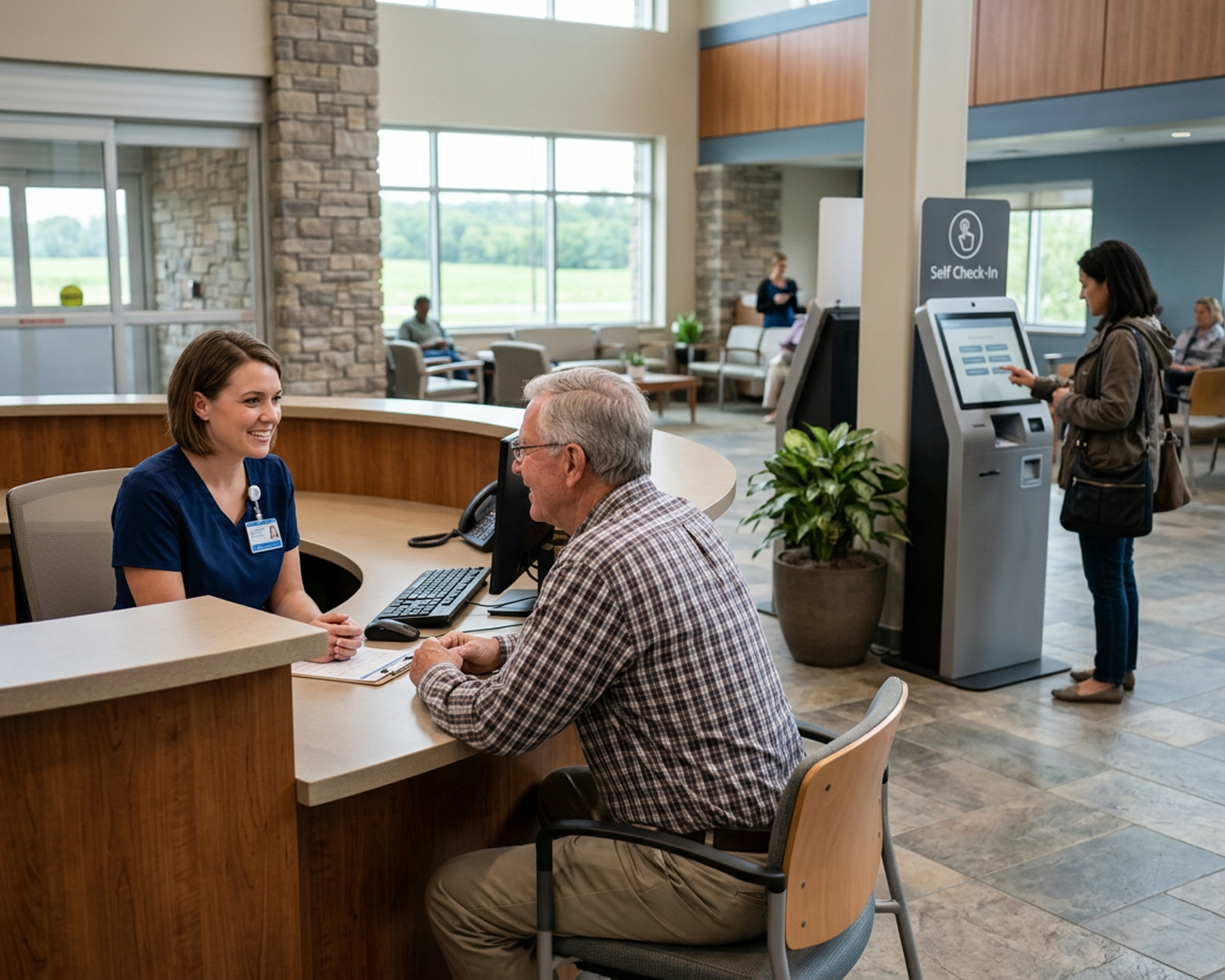
Balance is key when determining where technology belongs in patient access. Some patients want to handle as much as possible themselves, from making payments to scheduling services and retrieving their balance. Others want to speak with an employee or make a payment in person. Patients should have the opportunity to choose the experience that works best for them.
Healthcare can also bring a range of emotions, particularly when patients or their loved ones are dealing with illness. A registration kiosk cannot show empathy, but an employee can. Hospital revenue cycle automation should handle simple background tasks while preserving human interaction for the moments when patients need understanding, reassurance, or support.
Measuring the Impact of Healthcare Automation on Patients and Employees
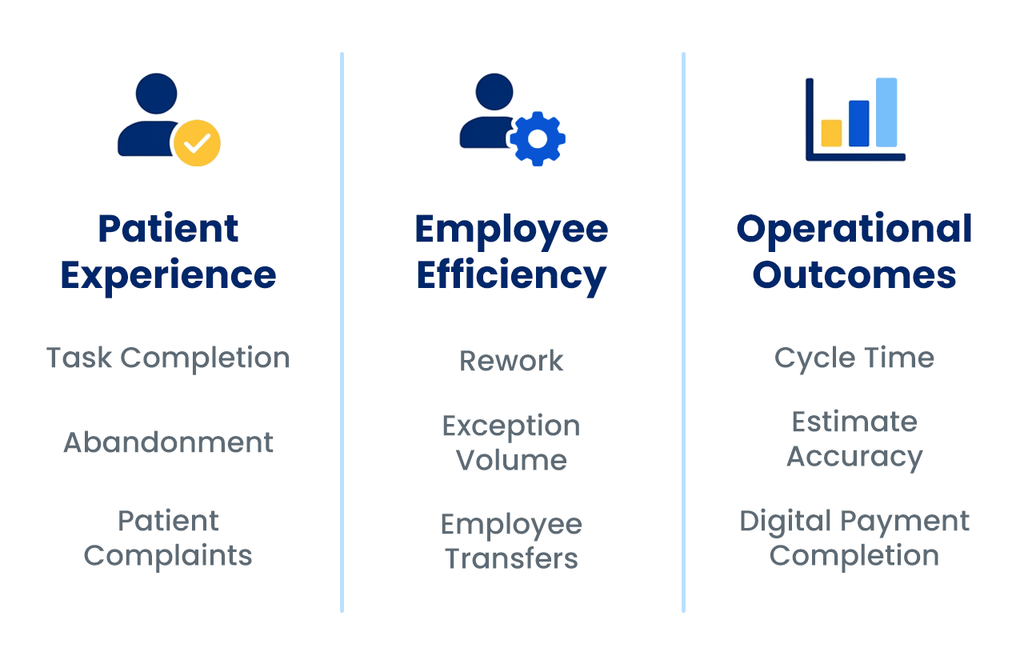
For hospital RCM leaders, technical performance is only the starting point. The more important question is whether the automated workflow makes the experience better. Leaders should monitor:
- Patient task-completion and abandonment rates
- Transfers to an employee
- First-contract resolution
- Registration or scheduling cycle time,
- Rework and exception volume,
- Estimate accuracy,
- Digital payment completion
- Complaints related to access or billing
These measures show whether automation truly streamlines the patient experience or simply shifts work to another channel.
Patient and employee feedback adds context to the data. If patients routinely press “0” to reach a person after interacting with an automated agent or if employees repeatedly correct inaccurate information, the technology may be adding a step rather than solving the problem. Before expanding an automated workflow, leaders should be able to answer three questions:
- Did it reduce effort and friction for the patient?
- Did it reduce rework and improve capacity for the employee?
- Did it produce a measurable operational, financial, or experience outcome?
If the answer is no, it may be time to rethink the workflow rather than simply adding more technology.
A Practical Standard for Patient-Centered Automation
The strongest automation strategies do more than increase transaction speed. They make routine tasks easier, surface exceptions sooner and preserve human support when patients need it. Before scaling hospital revenue cycle automation, leaders should confirm that it reduces patient friction, improves the employee experience, and delivers a measurable operational outcome. Technology creates the most value when it expands access and convenience without making healthcare feel less personal.