For rural hospitals, every technology investment is an opportunity to improve access to care while building a stronger, more sustainable healthcare system for the communities they serve. With limited capital and staffing capacity, organizations must focus on hospital technology investments that deliver measurable value across clinical, operational, and financial priorities. By aligning technology with strategic goals, rural hospitals can expand patient access, reduce administrative burden, support clinicians, and position their organizations for long-term success.
Prioritizing Technology That Solves Multiple Challenges

With limited resources, rural hospitals should prioritize technology that addresses several organizational needs at once rather than chasing the latest innovation. The technologies that create the biggest impact improve patient flow, accelerate reimbursement, reduce denials, simplify clinician workflows, and connect patients with specialists regardless of their location. Technology should be viewed as infrastructure that enables long-term sustainability, not simply another expense. Before making any investment, leaders should ask a simple question: Will this help us care for more patients, improve financial performance, or allow clinicians to spend more time with patients? If the answer is yes to several of those objectives, it is likely the right investment.
Leveraging Virtual Care, Automation, and Digital Infrastructure
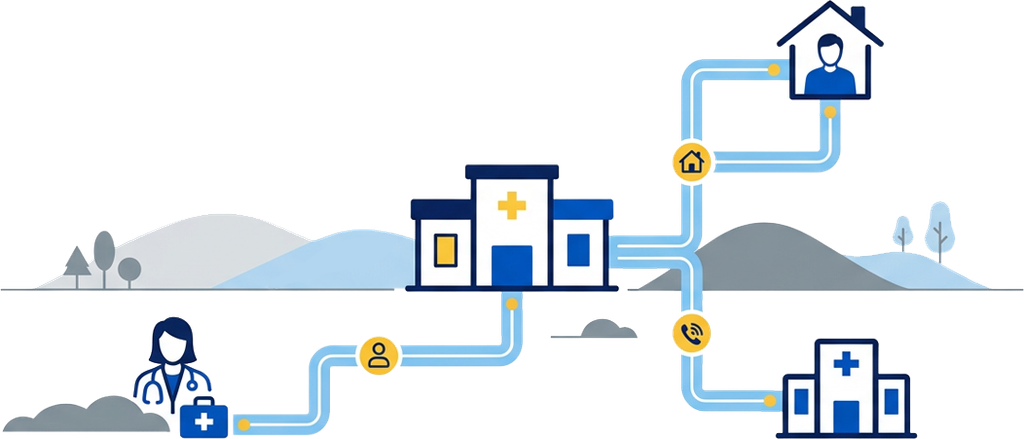
Virtual care strategies extend well beyond traditional telehealth. Today’s digital infrastructure allows rural hospitals to expand specialty services, improve care coordination, support remote monitoring, and provide access that would otherwise require hours of travel.
Automation frees healthcare teams from repetitive administrative tasks, allowing them to focus on higher-value work. Revenue cycle automation, prior authorization workflows, scheduling, patient communications, and supply chain management helps staff accomplish significantly more without adding headcount. Strong interoperability is equally important. When information follows the patient across hospitals, physician practices, post-acute providers, and specialists, clinicians can make better-informed decisions while reducing unnecessary testing and delays.
Using AI to Reduce Administrative Burden
Artificial intelligence should not replace clinicians. It should remove the work that prevents them from practicing at the top of their license. AI can reduce documentation burden, improve prior authorization, support clinical decision-making, identify revenue cycle issues before they become denials, improve coding accuracy, automate patient communication, and predict operational bottlenecks.
One of the most promising opportunities is using AI to anticipate the documentation payers or clinical guidelines may require before a prior authorization is submitted. By proactively identifying and presenting complete, accurate, and compliant documentation, AI can help reduce avoidable denials and the administrative burden of responding to them while improving approval efficiency. Over time, AI can serve as an intelligent assistant, helping care teams navigate administrative requirements while allowing them to spend more time focused on patient care.

Evaluating Technology Investments by Outcomes
Technology investments should always be evaluated based on measurable business and clinical outcomes rather than software features or impressive vendor demonstrations.
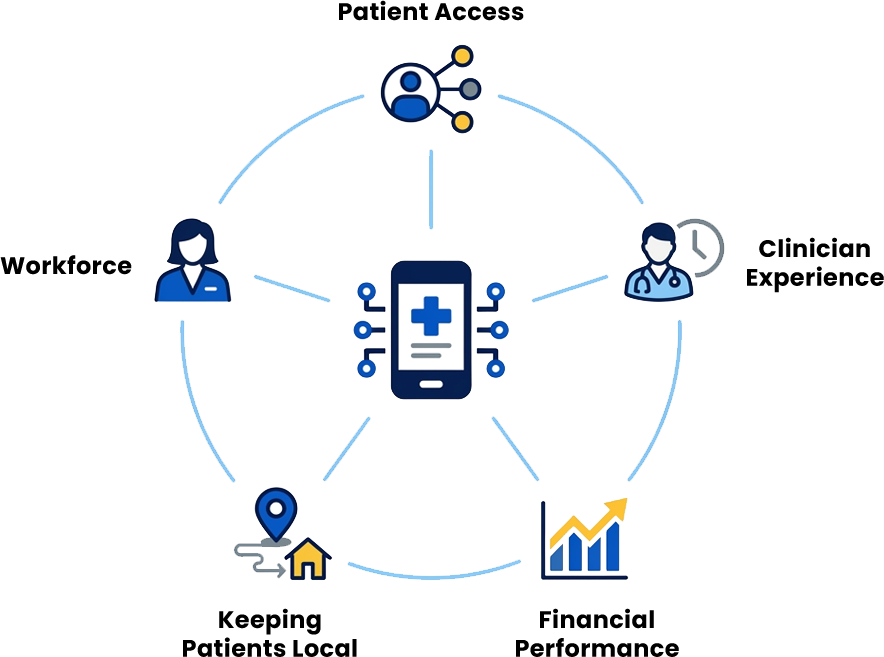
Hospital leaders should ask critical questions throughout and beyond implementation:
- Did patient access improve?
- Did clinician satisfaction increase?
- Did we reduce manual work and administrative burden?
- Did denials decrease and reimbursement improve?
- Did we confirm the technology aligns with applicable regulatory and compliance requirements?
- Did operating margins improve?
- Did patients remain within our local healthcare system instead of seeking care elsewhere?
- Did we strengthen our ability to recruit and retain providers?
The best technology investments drive meaningful improvements across the healthcare organization, creating lasting value for patients, providers, and the communities they serve.
Supporting Rural Healthcare Transformation
The Rural Health Transformation Program encourages hospitals to think beyond individual technology purchases and take a more strategic approach to transformation. Technology alone rarely solves organizational challenges. The greatest success occurs when digital initiatives are combined with operational improvement, revenue cycle optimization, physician engagement, clinical workflow redesign, workforce strategies, and long-term financial planning.
By modernizing infrastructure while strengthening operations and expanding patient access, hospitals can build a more sustainable future for their communities. The goal is not implementing more technology, it’s creating healthier communities by giving rural providers the tools, information, and operational support they need to deliver exceptional care close to home.
Building a Stronger Future Through Hospital Technology Investments
Rural healthcare is entering one of the most transformative periods in its history. Organizations that thoughtfully align technology, artificial intelligence, operational excellence, and strong leadership will become the cornerstone of healthcare delivery in their communities. By making thoughtful, strategic technology investments today, rural hospitals can improve patient access, strengthen financial sustainability, and continue delivering high-quality care close to home for years to come.